The Issue
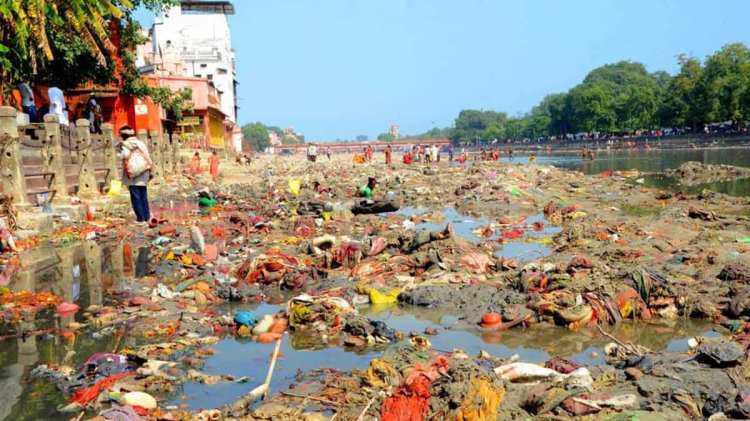
India is facing many challenges in the world today but one of their largest issues, and the one we’ll be focusing on, is water pollution in their country. India is one of the biggest countries in the world, not only by size, but by population too. India is home to the most polluted river in the world, the Ganges. It is to no surprise that India’s waters are polluted because they serve so many people for a variety of things. The Ganges river is used for religious usage, bathing, laundry, dumping of waste and even throwing in ashes of dead people (Gopalakrishnan 2019). In the city of Varanasi, a man and his family have worked for generations washing clothes on the banks of the Ganges (Rogers 2013). This station that his family has always used to wash clothes is placed right next to many institutions used for cremation and burning bodies that are then dumped into the river (Rogers 2013). The Ganges river provides water to nearly half a billion people (Gopalakrishnan 2019), while currently 99 million citizens in India lack access to safe and clean water (“India,” 2020). A lot of the rivers in India are also polluted because the big cities in India do not properly dispose of their waste. Then it is either dumped in the rivers or it flows into the rivers which flow for miles and it goes into people’s towns and villages and damages their access to clean and safe water. India doesn’t want to have polluted waters because it does not benefit anyone in their country, or around the world for that matter. Today a majority of the products we see in stores and other businesses may have been exported from other countries to be sold here. Revenue from India’s exports slowed when other countries stopped their imports of fish from India due to the presence of microbes and chemicals in the now inedible creatures (Shah 2018). One of the stakeholders that will be discussed later on is the United Nations Environmental Program. They work with countries who are a part of the UN and help them with environmental issues that they may have in their countries. Another stakeholder that is deeply rooted in this predicament India finds itself in is its government. With an issue this large a lot of the responsibility of providing needed resources and assistance to citizens falls on the government. The people of India are also another stakeholder. They depend on clean water for a lot of things and will benefit greatly from this issue, but they currently are extremely damaged because of the pollution. Finally, the animals of India are another stakeholder that are majorly affected by this issue. Unable to communicate their needs or concerns, the animals that live in these environments must try their best to continue surviving while their very home seems to be working against them. These conditions may be hard for one to imagine as they can easily access clean water from their sink or look outside at a beautifully clear flowing stream in their backyard, but for the people of India this issue of living with extreme water pollution is becoming a norm for their everyday lives.
Stakeholders

The People of India
The population of India is currently 1.37 billion. Though it is a large country, that is still a lot of people. India supports 17.8% of the world’s population (Statistics Times 2020). In an article written by Annie Banerji, she states that, “India is “suffering from the worst water crisis in its history”, threatening hundreds of millions of lives and jeopardizing economic growth, a government think-tank report said in June” (July 4th, 2018). Nearly half of the population in India face water issues. With that, almost 200,000 people die each year from the polluted water (Banerji 2018). India does have water tanks that people can go to and get water from, but it’s not always clean, it is crowded and not reliable. Every 3 in 4 Indians are affected by water pollution and almost 70% of India’s water is contaminated. The people do not properly dispose of their waste which goes directly into the water and pollutes it (Banerji 2018). These people are negatively impacted, but it is because of their actions. Another cause is people doing their laundry in the waters and using detergents. The chemicals that make up the detergents get into the water and pollute it (Shah 2018). The fish that are found in these waters are not able to be consumed because they are too high in mercury, lead and cadmium (Shah 2018). The fish can also be affected by human feces found in the water. People can also get severe health issues from these contaminated waters; such as cancer, osteoporosis, vision loss, fertility issues, and even more (Shah 2018). Image from (fineartamerica.com).
The Government of India
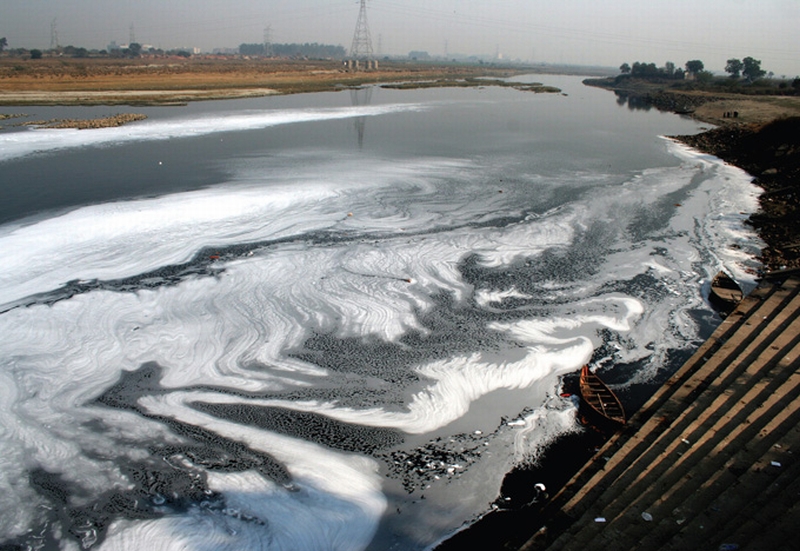
India’s government plays a large role in not only trying to manage the effects of the extreme pollution on their citizens but also in actively attempting to clean up the waste in their water. The detrimental impact of water pollution on individual’s health is costing the government “billions of Rupees” in medical expenses (Shah 2018). While having to provide many medical services to its citizens, India’s government is tied up in legal battles on top of it. One of the most contaminated rivers in the world is the Ganges, a sacred river in India that flows through five states (Chandrashekhar 2018). This river has been the topic of a lawsuit “by environmentalists and citizens” brought upon by the lack of success resulting from a government plan to clean the Ganges (Chandrashekhar 2018). This plan, among many others, has failed to clean up the pollution that has led individuals to compare the Yamuna river to “…a toxic drain” (Pedma 2015). India’s government faces backlash not only from its own citizens but also from individuals all around the globe that are aware of the waste situation in their country. While the industrialization that is causing these issues may be bringing some money into the country, the government is largely seeing a negative impact stemming from its water pollution. Image from (planetcustodian.com).
The UN Environment Program
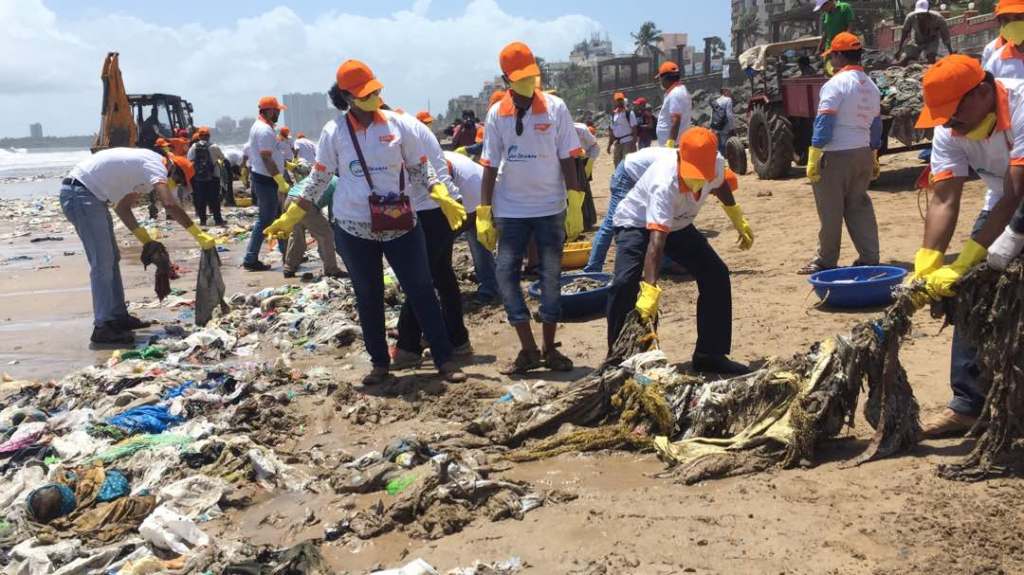
The United Nations Environment Program (UNEP) is the leading global environmental power that pretty much regulates everything environmental across the United Nations and supports the global environment (“About UN Environment Programme,” 2020). Their role with the issue in India is to help them. UNEP helps India in a variety of ways and has many goals for the country; such as no poverty, zero hunger, clean water and sanitation, life below water and many more (“India UNEP,” 2020). Currently they have a project going on that should last until March of 2022 that is focusing on pollutants. It began in December of 2018. This project will work with the government of India and non-government organizations so that the country is able to combat the issues that are going on (“India UNEP,” 2020). I wouldn’t say UNEP is negatively or positively impacted by the water pollution and other issues in India, but I will say that they positively impact India. Image from (twitter.com).

Animals of India
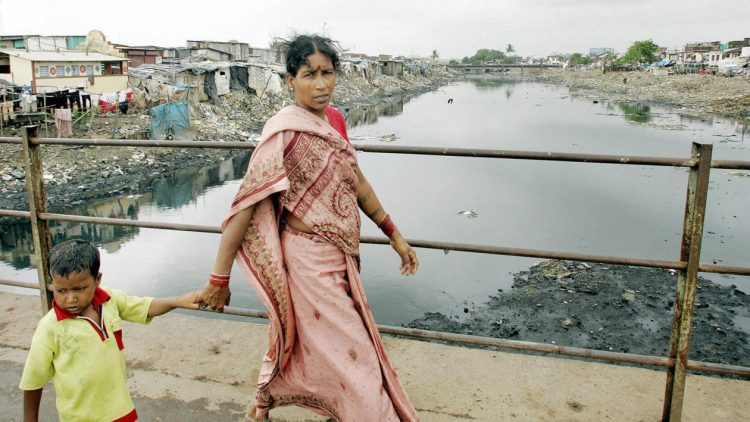
Just as humans, animals are affected by the pollution in India’s waterways. Stray dogs that roam the Kasadi river and the industrial area of Mumbai were found dyed blue by the chemicals and waste they encountered when walking in the water searching for food (Persio 2017). The pollution in the river is inhibiting these animals’ ability to survive and thrive in their own environment, thus they are negatively impacted by a problem that was not caused by them. In the Ganga river scientists have discovered that the pollution runs so deeply in two sections of the water that there is no existence of aquatic life there (Thakur 2019). In Joydeep Thakur’s article he writes “The scientists have found millions of litres of waste water, containing toxic elements and metals, is dumped in the Ganga” (Thakur 2019). Not only is the pollution in the water resulting in harm to the animals living in and by it, it’s destroying habitats where any organism will be able to survive. These beings are innocent victims caught in the middle of a warpath led by humans and fueled by greed. Image from (Facebook.com).
Scholarly Articles
Peru’s Issues with Water Pollution (Catherine)
This article is about water issues in Peru and how mining in Peru leads to the water problems. Anthony Bebbington and Mark Williams are the authors of this article; “Water and Mining Conflicts in Peru.”They share in their research done that companies claim to be practicing safe and environmentally friendly techniques, but in reality they are not. With these companies actually negatively impacting the environment and water, it affects these peoples water resources. Mining has become a big thing to do in the Andes, so the miners won’t be going away anytime soon. Though the mining has caused some issues with the water, it is thought of to also bring economic growth to some of the smaller towns in Peru (Bebbington and Williams 2008). They suggest that their needs to be a sort of water monitoring process for the people affected by the mining and that the mines need to also be regulated so that they are held accountable for damage that they cause (Bebbington and Williams 2008). They have also suggested closing these mining sites, but even after they close they will still have pollution problems in their waters (Bebbington and Williams 2008). Although Peru is on the other side of the world from India, they still face similar issues.
Poverty in India (Mikeh)
In her publication, Shruti Majumdar reflects on Akhil Gupta’s book “Red Tape: Bureaucracy, Structural Violence, and Poverty in India,” offering not only Gupta’s original insights, but also adding in where Majumdar believed he fell short. She begins her article with Gupta’s idea of “Extreme poverty, as a direct form of killing, rather than as a situation in which the poor were simply ‘allowed to die’” (Majumdar 2014). This idea of extreme poverty being seen as a form of killing can be extended to the conditions that individuals are living in where there are high concentrations of water pollution in India. The Mithi River in Mumbai is described as a “glorified sewer” that’s serving “…a city where half the population lives in slums” (Chandrashekhar 2018). As the piece continues she examines Gupta’s point that in India, the poor’s most influential way to exercise change is through local politics (Majumdar 2014). Their wealthier counterparts; however, may have a more direct route of fighting for change through their connections with other individuals. Issues such as water pollution in your community is one that local politics can only do so much about. With demographics such as the ones prevalent in Mumbai, the individuals who are most affected by this waste have the least direct route of doing something to help change their situation. Just as in other parts of the world, India’s citizens of lower socioeconomic status seem to be at a disadvantage when it comes to their very livelihood compared to wealthier individuals in their community.
The Sugar Creek Farmers of Ohio (Catherine and Mikeh)
In their work, these authors investigate the pollution facing the state of Ohio and the farmers that live and work there. In the past 40 years different types of pollution have intensified in Ohio that have been categorized as “both a liability and an asset” (Richard, Parker, and Weaver 2008). They see this pollution as a liability when it starts polluting water sources used for drinking, and when the high levels of nitrogen and phosphorus cause hypoxia in soil (Richard, Parker, and Weaver 2008). While, on the other hand this pollution can be seen as helpful in the eyes of some when it brings in money for conservation bills and programs (Richard, Parker, and Weaver 2008). Farmers and researchers have teamed up to try and combat the issue. By doing this it helps the researchers and the farmers, they both benefit from each other. Since doing this, the nitrogen in the waters has decreased consistently (Richard, Parker, and Weaver 2008). The EPA (Environmental Protection Agency) to help give extra guidance on how to maintain the farmers and water problems. These issues go far more deep than just being in Ohio; as there are similar issues all around the world and country. Ideas such as these could possibly help a country that has water as polluted as India’s to start heading its way back to better conditions for their citizens. If small groups of areas make little changes like this, then imagine what will happen 15 years from now if companies continue to do this.
Citations
“About UN Environment Programme.” n.d. UN Environment Programme website. Accessed [March 27, 2020]. https://www.unenvironment.org/about-un-environment
Banerji, Annie. 2018. “India’s ‘worst water crisis in history’ leaves millions thirsty” Reuters website, July 4. Accessed [March 25th, 2020]. https://www.reuters.com/article/us-india-water-crisis/indias-worst-water-crisis-in-history-leaves-millions-thirsty-idUSKBN1JV01G
Bebbington, Anthony, and Mark Williams. 2008. “Water and Mining Conflicts in Peru.” BioOne Complete website, August 1. Accessed [March 7, 2020]. https://bioone-org.ezproxy.uky.edu/journals/Mountain-Research-and-Development/volume-28/issue-3/mrd.1039/Water-and-Mining-Conflicts-in-Peru/10.1659/mrd.1039.full?tab=ArticleLink
Chandrashekhar, Vaishnavi. 2018. “Dying Waters: India Struggles to Clean Up Its Polluted Urban Rivers.” Yale Environment 360 website, February 15. Accessed [March 22, 2020]. https://e360.yale.edu/features/dying-waters-india-struggles-to-clean-up-its-polluted-urban-rivers
Gopalakrishnan, Raju. 2019. “Saving a river: Pollution in India’s holy Ganges makes it toxic.” Reuters website, January 18. Accessed [March 28, 2020]. https://www.reuters.com/article/us-india-ganges/saving-a-river-pollution-in-indias-holy-ganges-makes-it-toxic-idUSKCN1PC0CT
“India.” 2020. Water website. Accessed [March 26, 2020]. https://water.org/our-impact/india/
“India UNEP.” n.d. UN Environment Programme website. Accessed [March 27, 2020]. https://www.unenvironment.org/explore-topics/chemicals-waste/what-we-do/special-programme/special-programme-projects-database-15
Madan. 2015. “Ugly Reality of Yamuna – India’s Most Polluted River (In Pictures).” Planet Custodian website, October 28. Accessed [March 23, 2020]. https://www.planetcustodian.com/ugly-reality-of-yamuna-indias-most-polluted-river-in-pictures/8311/
Majumdar, Shruti. 2014. “Red Tape: Bureaucracy, Structural Violence, and Poverty in India.” Governance 27 (1): 163–66. doi:10.1111/gove.12059.
Moore, Richard H., Jason Shaw Parker, and Mark Weaver. “Agricultural Sustainability, Water Pollution, and Governmental Regulations: Lessons from the Sugar Creek Farmers in Ohio.” Culture & Agriculture 30, no. 1/2 (November 2008): 3–16. doi:10.1111/j.1556-486X.2008.00003.x.
Padma, TV. 2015. “Ganga more polluted than ever, despite Indian government’s action plans.” The Third Pole website, December 28. Accessed [March 22, 2020]. https://www.thethirdpole.net/en/2015/12/28/ganga-more-polluted-than-ever-despite-indian-governments-action-plans/
Persio, Sofia Lotto. 2017. “Polluted Water: Blue Dogs Expose Chemical Firm Over Contamination Of Indian River.” Newsweek website, August 22. Accessed [March 21, 2020]. https://www.newsweek.com/polluted-water-blue-dogs-raise-alarm-environmental-damages-india-653316
“Population of India.” 2020. Statistics Times website. Accessed [March 26, 2020]. http://statisticstimes.com/demographics/population-of-india.php
Rogers, Janak. 2013. “India’s polluted Ganges River threatens people’s livelihoods.” DW website, November 21. Accessed [March 23, 2020]. https://www.dw.com/en/indias-polluted-ganges-river-threatens-peoples-livelihoods/a-17237276
Shah, Natasha. 2018. “Explained: Causes And Impacts Of River Water Pollution In India.” Youth Ki Awaaz website, November 1. Accessed [March 23, 2020]. https://www.youthkiawaaz.com/2018/11/the-rising-pollution-of-rivers-in-india-what-might-be-the-consequences/
Thakur, Joydeep. 2019. “Polluted water making Ganga’s river bed unfit for sustaining aquatic life, says new research.” Hindustan Times website, December 25. Accessed [March 23, 2020]. https://www.hindustantimes.com/india-news/polluted-water-making-ganga-s-river-bed-unfit-for-sustaining-aquatic-life-says-new-research/story-Mfi8BvmXt2Xuw4iZwuDURN.html
 Water Pollution in India