Water Pollution in India
Mikeh Brammell, Catherine Simonis
About India
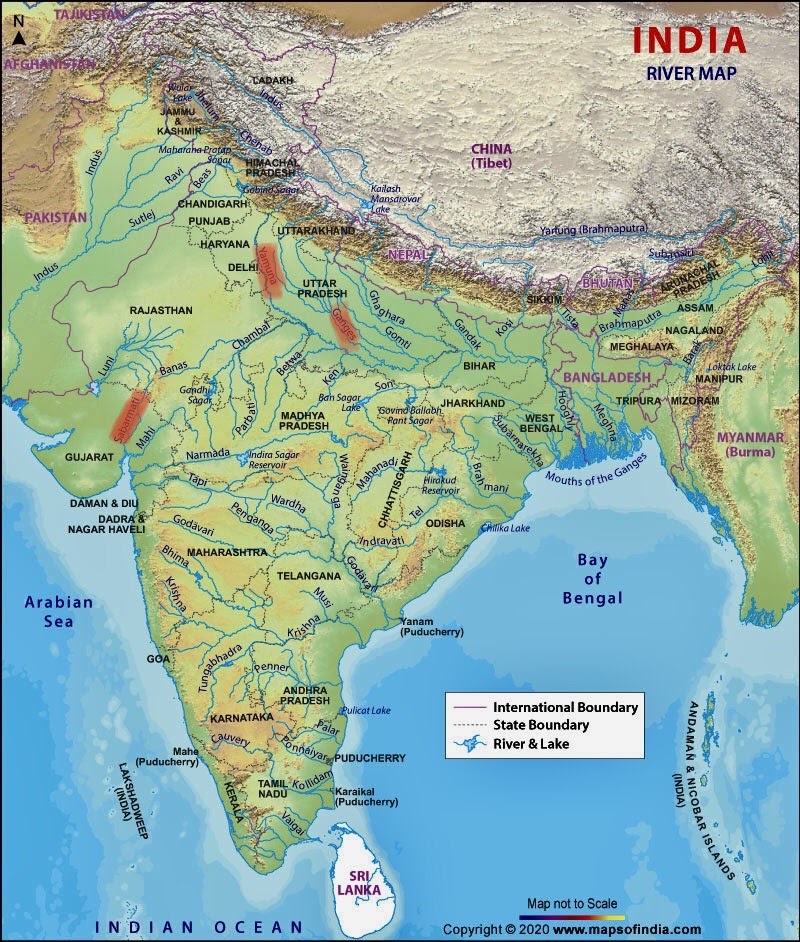
India is the second most-populous country in the world, with China leading as number one. The United States is 3 times larger than India. By 2030, India is projected to be the most populous country in the world. It is home to the Taj Mahal, 12 out of the 165 major rivers in the world, and a portion of the Himalaya mountain range (Wolpert 2020). 6 countries border India: Pakistan, Nepal, China, Bhutan, Myanmar, Bangladesh. ⅓ of India is coastline, on the east of India is the Bay of Bengal and to the west is the Arabian Sea. On the map we have hi-lighted the top three polluted rivers in India (Systems 2017). Map from (mapsofindia.com).
India’s Government
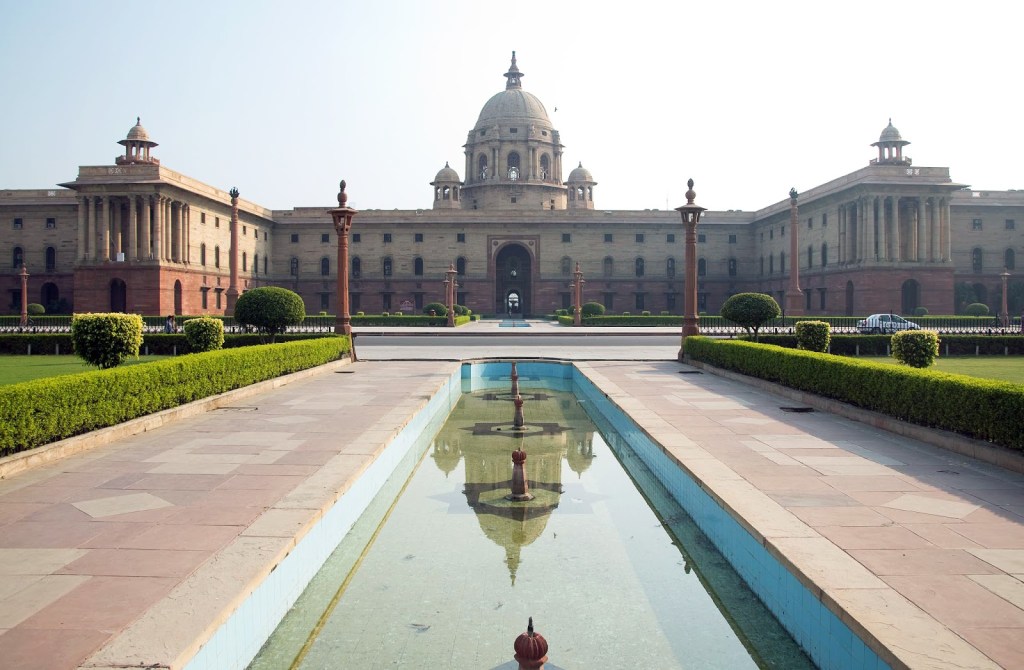
India became an independent country on August 15, 1947, and put their constitution into place on January 26, 1950. The president of India holds term for 5 years, and is the Head of the State. The president is elected by an electoral college, meaning in their instance the people don’t have a direct say in their president. The current president of India is Ram Nath Kovind and has been in office since July 25, 2017. India operates under a parliamentary republic form of government with an executive, judicial, and legislative branch. The Prime Minister is the head of government and has no specified term limit, with Narendra Modi being the 14th and current one (“India at a Glance,” 2020). Picture from (Worldatlas.com).
Religion in India
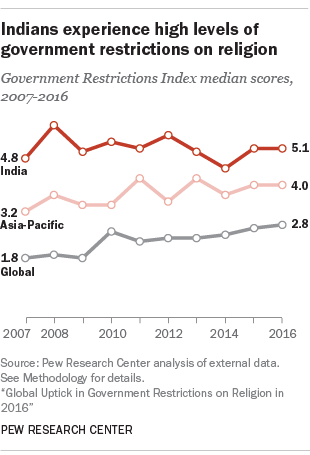
Religion is very important for the people of India. They have many different forms of religion in their country but they still have some government restrictions on their religions. Ewelina U. Ochab states “Hindu extremism is on the rise with several cases of harassment, intimidation and violence being committed against Hindu Dalits, Muslims, Buddhists, Jains, Christians and Sikhs” (Ochab 2019). With their religious freedoms still on the decline for the past decade. There are still restrictions on conversion of religions in at least six of India’s states. These restrictions have “at times been used to arrest and intimidate Muslims and Christians who proselytize” (Majumdar 2018). Chart from (Pewresearch.org).
India’s Environmental History
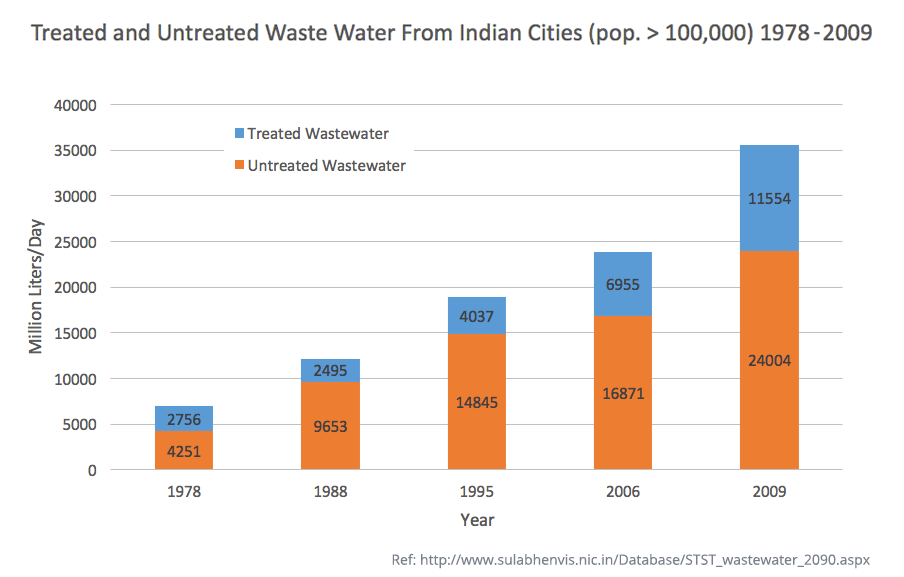
The British have been passing laws to improve the environment in India since 1853. So, they have a long history with their environment. The environment took a turn for the worse during the years of 1947-1990 (Wolpert 2020). They do have programs in place, but the country is just so polluted. At least 80% of the surface water in India is polluted (Systems 2017). There are many reasons for the water pollution such as; industrial waste, dumping dead bodies in the water for religious practices, oil leaks, etc. India is home to the Yamuna River, which is on the list for the top ten dirtiest rivers in the world. Over 100 million people do not have access to good, quality water (Sadhguru 2018). Chart from (weforum.com).
Population in India
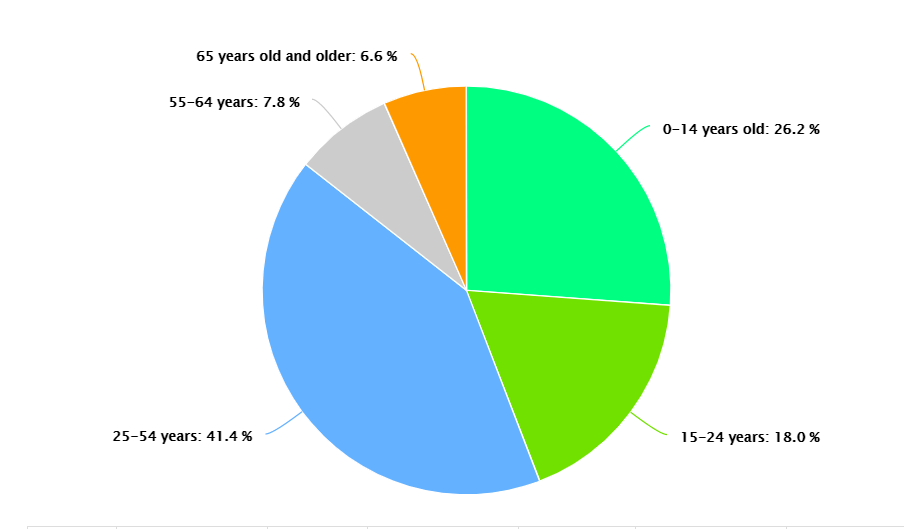
With a population of 1.3 billion, India houses 17.7% of the Earth’s population (“India Demographics,” n.d.). It is soon predicted to be the most populated country in the world, but according to this article by Vaishnavi Chandrashekar this might not be true much longer because population growth is slowing down. Women are becoming more educated and actually going to school instead of staying at home, which also means that they are learning about family planning. Though no matter what, they will still have a very large population. “The Indian states that have the highest fertility rates also have the lowest socioeconomic indicators” (Chandrashekhar 2019). In these low socioeconomic places is also where a lot of these polluted rivers are. These people already do not have a lot of access to resources, but on top of that they are extremely populous places with no clean water. Chart from (worldometers.info).
CITATIONS
Chandrashekhar, Vaishnavi. 2019. “Why India is Making Progress in Slowing its Population Growth”. Yale Environment 360 website, December 12th. Accessed [February 18th, 2020]. https://e360.yale.edu/features/why-india-is-making-progress-in-slowing-its-population-growth
“India at a Glance.” 2020. India website, January 08. Accessed [February 12th, 2020]. https://www.india.gov.in/india-glance/profile
“India Demographics.” n.d. Worldometer website. Accessed [February 9th, 2020]. https://www.worldometers.info/demographics/india-demographics/
Majumdar, Samirah. 2018. “5 Facts about Religion in India”. Pew Research website, June 29. Accessed [February 4th, 2020]. https://www.pewresearch.org/fact-tank/2018/06/29/5-facts-about-religion-in-india/
Ochab, Ewelina. 2019. “Religious Freedom is on the Decrease in India”. Forbes website, January 12th. Accessed [February 4th, 2020]. https://www.forbes.com/sites/ewelinaochab/2019/01/12/religious-freedom-is-on-the-decrease-in-india/#6588e326403b
Sadhguru, JV. 2018. “It’s time to clean India’s Polluted Rivers. Here’s How We Can Do it”. We Forum website, March 22. Accessed [February 13th, 2020]. https://www.weforum.org/agenda/2018/03/the-clean-sweep-cleaning-up-india-s-rivers/
Systems, Kent. 2017. “The Most Polluted Rivers of India”. Kent website, February 13. Accessed [February 8th, 2020]. https://www.kent.co.in/blog/the-most-polluted-rivers-of-india/Wolpert, Stanley. 2020. “India”. Britannica website, February 12. Accessed [February 4th,2020]. https://www.britannica.com/place/India
Wolpert, Stanley. 2020. “India”. Britannica website, February 12. Accessed [February 4th,2020]. https://www.britannica.com/place/India
WorldOMeter. 2020. “India” Worldometer website. Accessed [February 8th, 2020]. https://www.worldometers.info/demographics/india-demographics/
 Water Pollution in India